Drawing and photo
In the real world no two aircraft types look alike, not even two of the same size. A CRJ carries its engines at the tail under a T-shaped tailplane, an A300 has two huge engines under the wing, a PC-12 a single propeller in the nose. Every type has a fuselage of its own length, a wing with its own kinks, its own number of windows and its doors in its own places. Spotters name a type from its silhouette at a glance, so the model has to pass that test too.
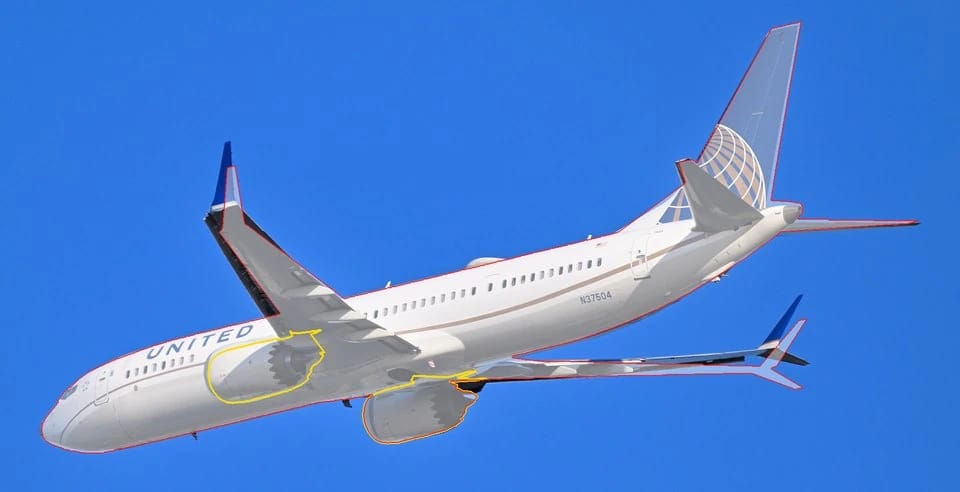
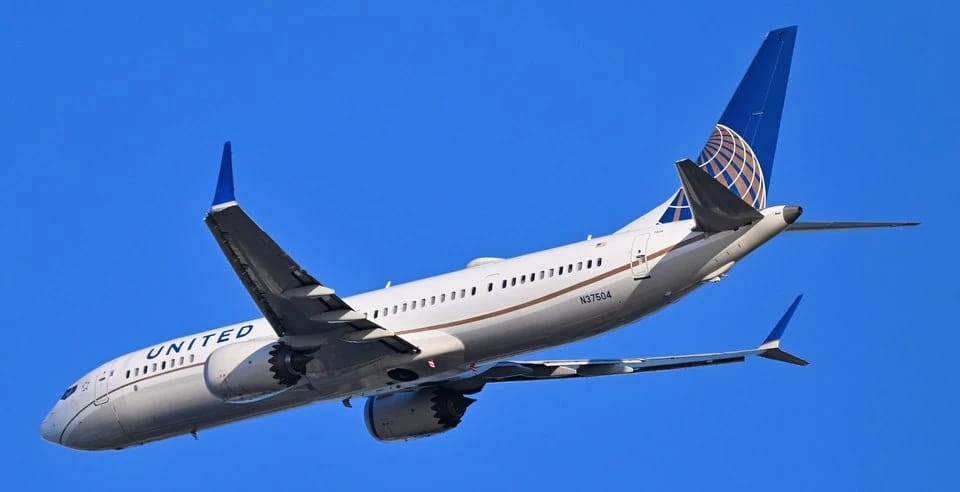
Manufacturers publish documents for airport planners with the dimensions of their aircraft: drawings from the side, from above and from the front, door positions, heights above the ground. That is what we build the models from. But a drawing is only a drawing, so we then lay each model over photographs of the real aircraft from Wikimedia Commons, always of the same side and at the same angle. Wherever the model doesn’t cover the photo, the difference shows.
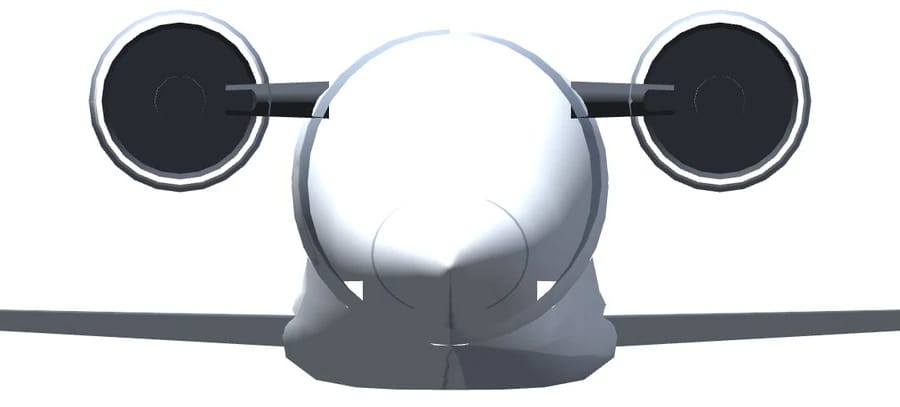
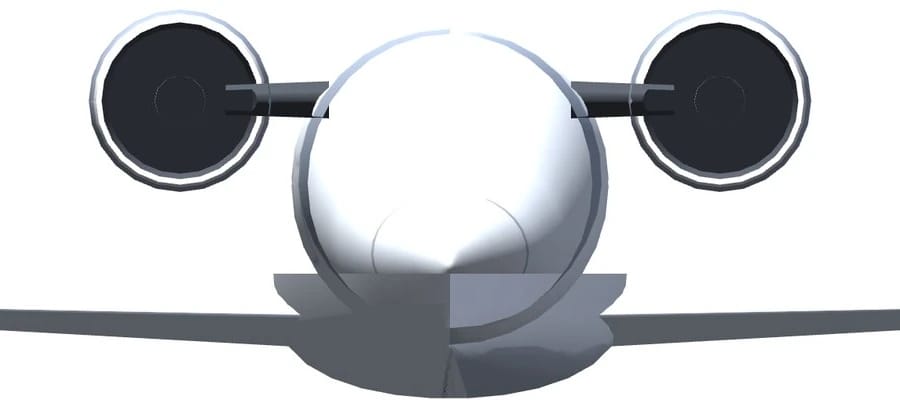
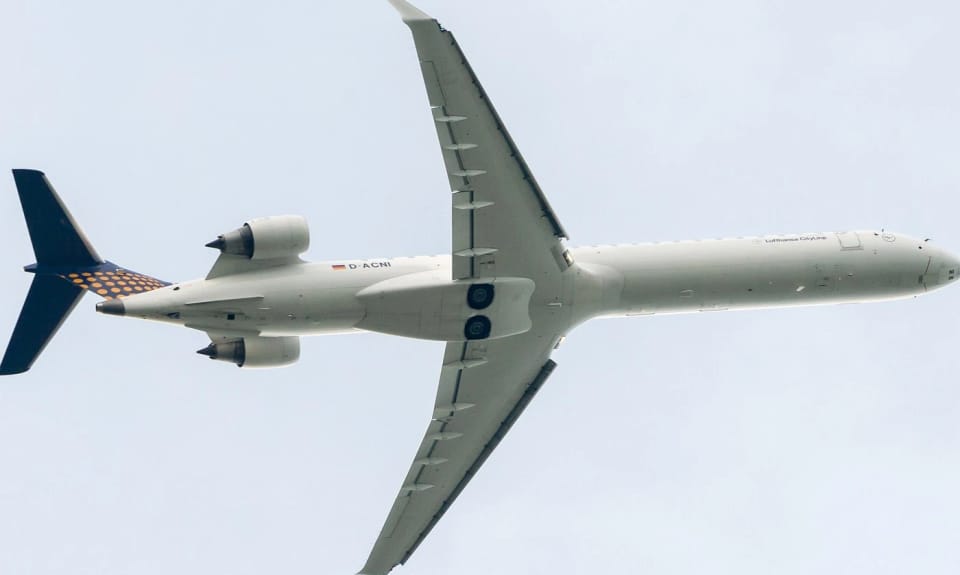
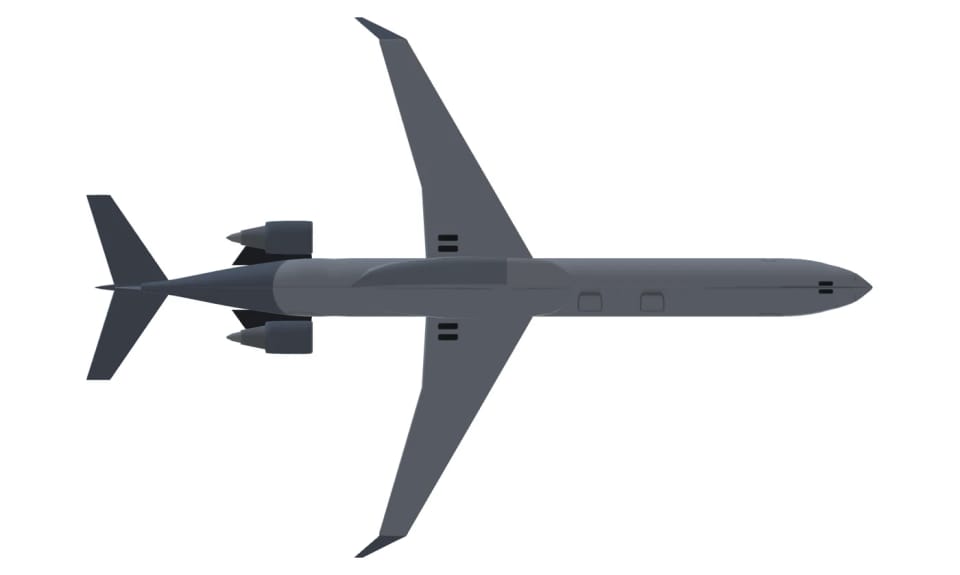
That is how we found what nobody would have spotted from above. Our CRJ had a fairing under the wing root with a flat, horizontal top that stuck out of the fuselage behind the wing like a shelf, with a notch underneath it when seen from behind. The real fairing is a box with vertical sides and a flat bottom. Ours is too, now.
We also thought about the opposite case: something that looks wrong and is right. The trailing edge of the CRJ’s wing has a kink. Close to the fuselage it runs almost straight across, further out it sweeps back. From behind at eye level the edge looks straight, so the kink looks like a mistake in the model. The manufacturer’s drawing has it and a photo from below shows it, so it stayed.
The windows were decided by photos of both sides. The CRJ700 gained a sixth window behind the emergency exit. The CRJ1000 has sixteen windows ahead of the exits, not the seventeen of its drawing: two real aircraft photographed from both sides have sixteen. When the drawing and the aircraft disagree, the aircraft wins.
,_Bombardier_CRJ-900LR,_D-ACNI@LUX-103.jpg)
Square windows and five blades
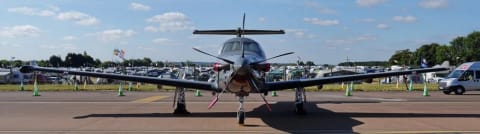
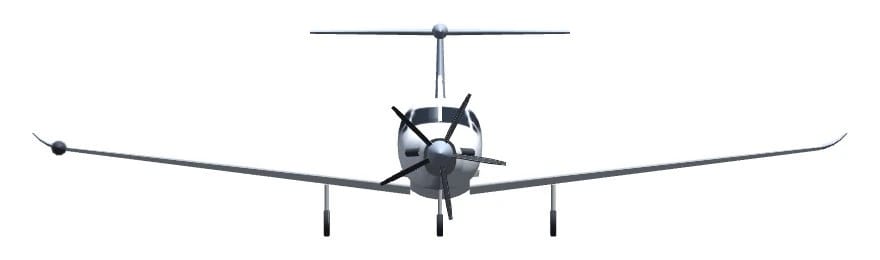
The Pilatus PC-12 is a single-engine turboprop for a handful of passengers that flies from short runways and grass strips. It looks like a simple aircraft, and yet its model took several rounds. The cabin windows were ovals, while the real ones are upright rectangles with rounded corners. The windscreen was one dark surface; the real one has two panes with a post in the middle and a small triangular window behind it. And the wingtips lacked the winglet, the curve that turns up and out.
Today the counts and positions match the manufacturer’s drawing and photos of both sides: four windows on the left, five on the right, one of them in the emergency exit over the wing. The right wing gained the small weather radar pod that shows up on photos from the front as a ball at the wingtip.
We had to choose between versions, too. Older PC-12s have rounder windows, the newest more square ones, and our model follows the newest. The same goes for the propeller: the type code PC12 doesn’t say which version you are looking at. Older aircraft have four blades, and since 2016 the PC-12 has come from the factory with five. Most PC-12 flights in our network are flown by today’s versions, so our model has five blades.
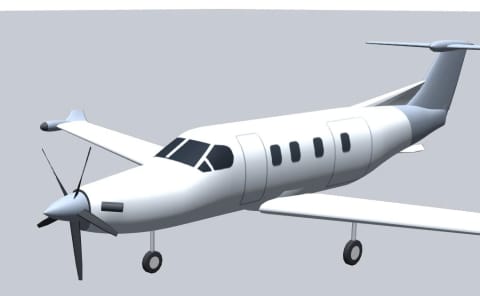
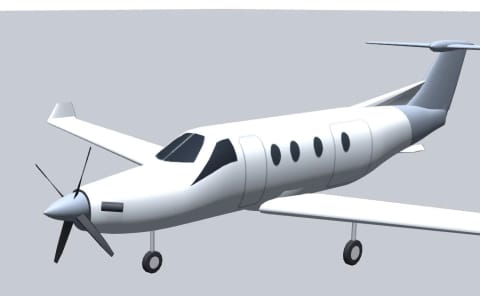
From the front you can see the winglets curving up at both wingtips. On our model the radar pod sits on the right wing, which is on the left of the picture.
.jpg)
When the drawing is wrong
The Boeing 737 MAX is one of the most common aircraft in the sky. The 737-8 alone flew more than 67,000 flights in our network in the week to 5 October, the fourth most common type of all. The MAX is the younger brother of the 737-800 and shares much of its airframe, so we took its tail from the 737-800 drawing. That was a mistake.
The tailplane came out a metre too far forward and 30 percent too big. The 737-800 drawing contradicts itself: the side view puts the tailplane somewhere other than the view from above. What decided it was the area the manufacturer gives for the tailplane, and the MAX drawing. Today ours has 32.8 square metres, like the real one.
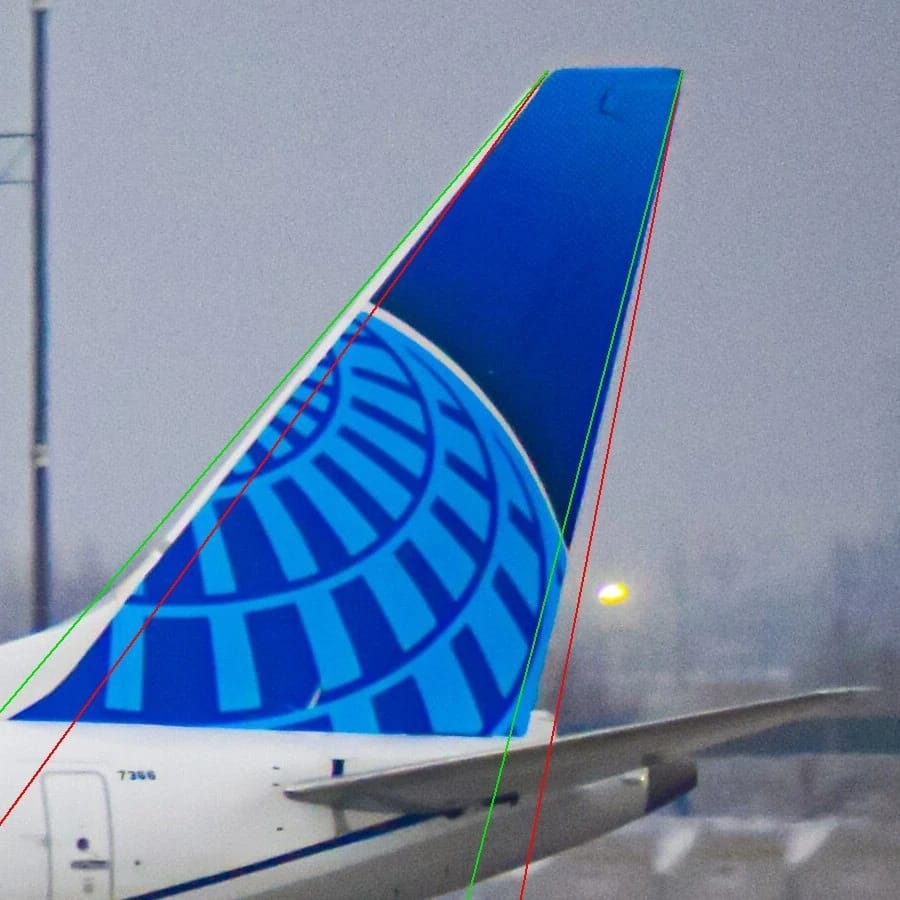
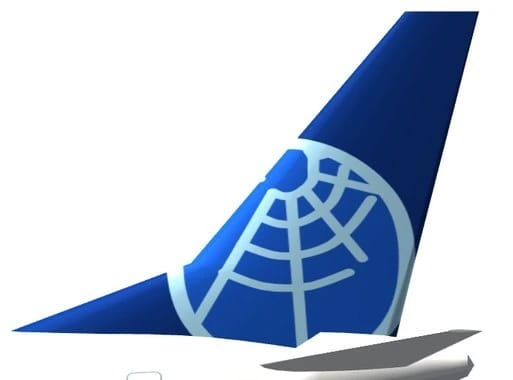
Then came the fin. On photos taken square from the side, of the 737-800 and the MAX, left side and right, its leading edge is swept back 40 degrees. The 737-800 drawing shows 36. Yet the fin is the same on both versions; we checked that on pairs of photos taken from the same spot and angle. The mistake was in the drawing, not in the aircraft, and the corrected fin is now on the 737-800 and the MAX alike.

Fixing one tail fixed others too. Where the tailplane meets the narrowing rear fuselage, its root stuck out of it a little and from behind you could see a slit. One shared piece of code draws that joint for every aircraft, so the same flaw was on 96 types, on the Boeing 747 by almost a metre. A single fix repaired all of them.
The last round came from the photos. We laid the 737 MAX model over ten photographs at the same angle, and most of them agreed: the real wing sits a little closer to the nose. The MAX drawing confirmed it, 30 centimetres compared with the 737-800, while the main landing gear stays where it was. Along the way it turned out that the 737-9 had its wing up to half a metre too far forward and the 737-7 almost a metre too far back. All three fit now.

The freighters’ A300
The A300 was Airbus’s first aircraft. Passengers hardly meet it any more, but it keeps flying at night over Europe and America as a freighter for UPS, FedEx and DHL. In the seven days to 6 October our network saw 1,713 flights of the A300-600 and A310, more than any other widebody family that didn’t yet have a shape of its own.
Until then it was drawn by a general generator from related types, with a fuselage more than three metres too short and a wing without the kink in its trailing edge. Today it stands on the manufacturer’s original three-view drawing in vectors, where the length of 54.08 metres and the span of 44.84 metres agree with the published dimensions to the millimetre. Where the drawing and the table of dimensions disagree, the table wins. The wingtips gained their small upright fences, the fin a curved dorsal fin, and the cargo door sits where the photos show it.
We thought of the paperwork too. The aircraft register lists some freighter A300-600s under a different type code, A30B, and such an aircraft used to get a generic shape. Today both codes fly the same A300-600.
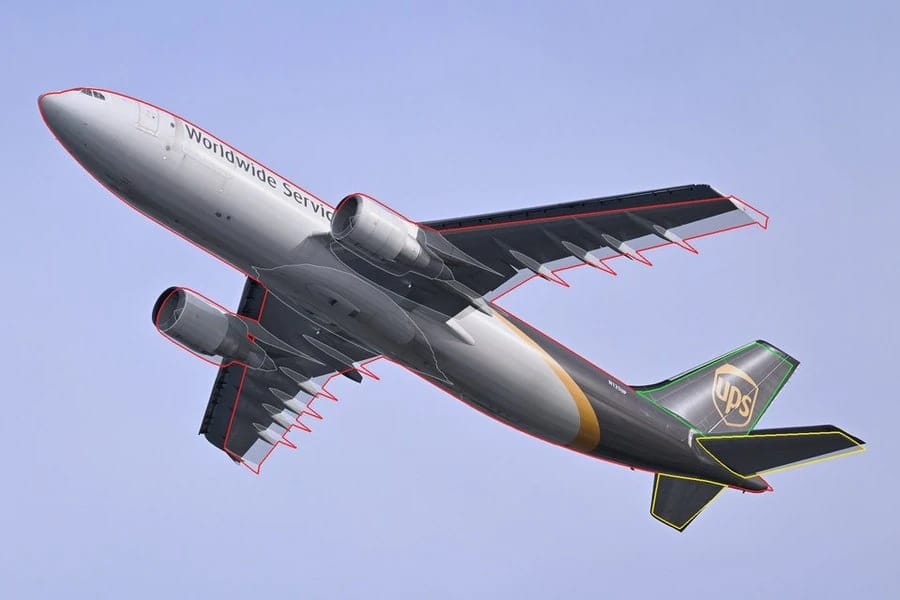
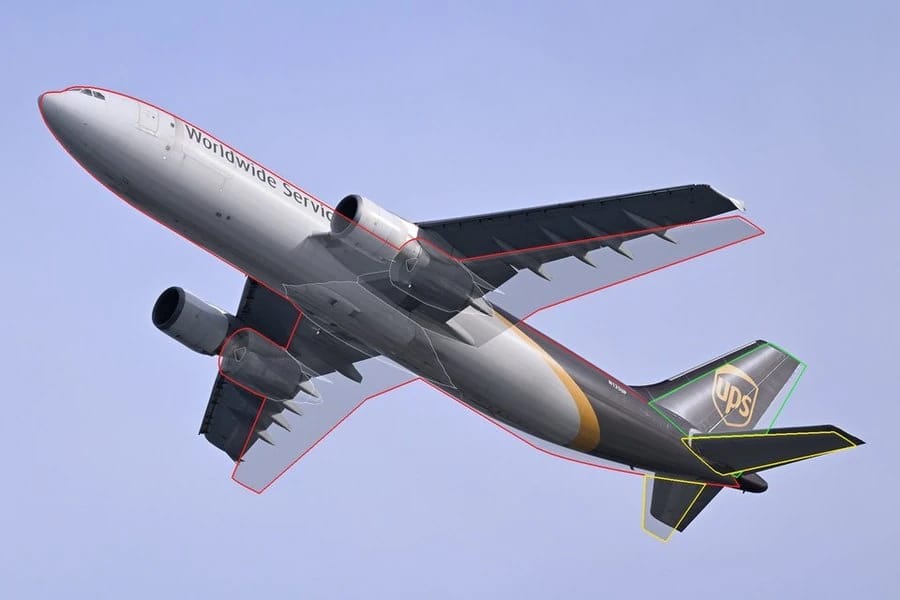

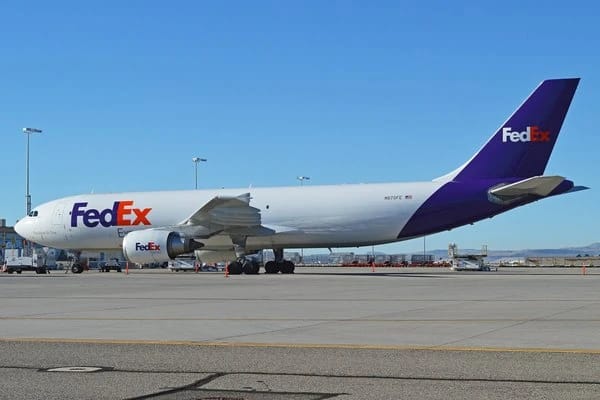
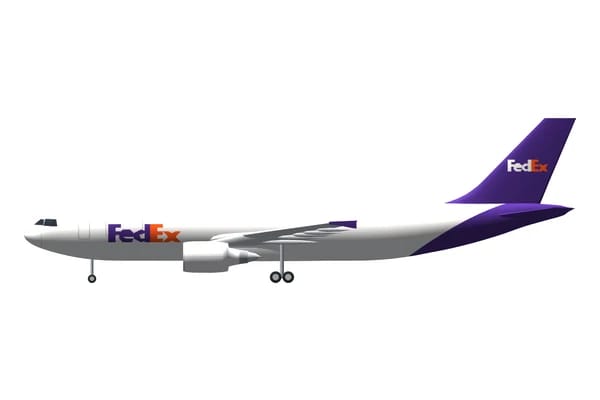
The three airlines that fly the A300-600 most often all carry cargo, and on our model each wears its own colours. Photo on the left, our model of the same side on the right.
A300-600F · FedEx
A300-600F · UPS
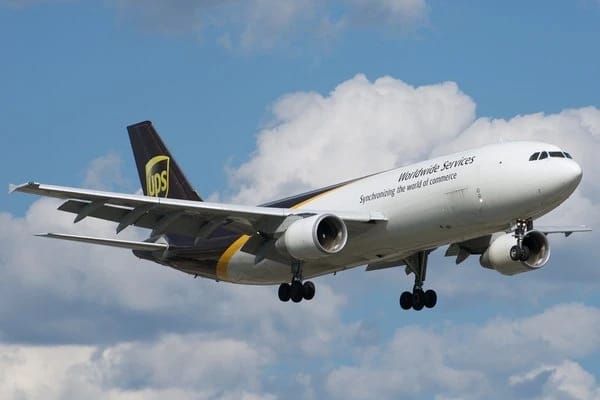
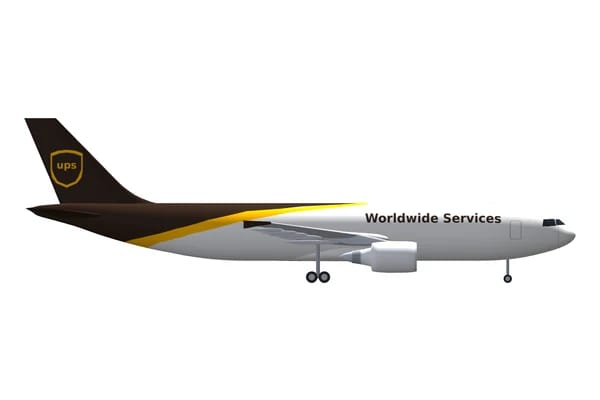
A300-600F · DHL
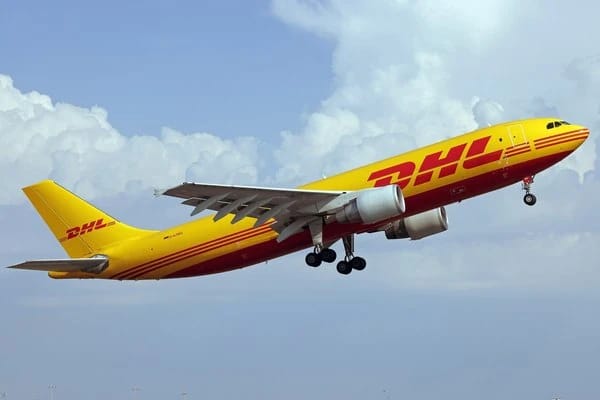
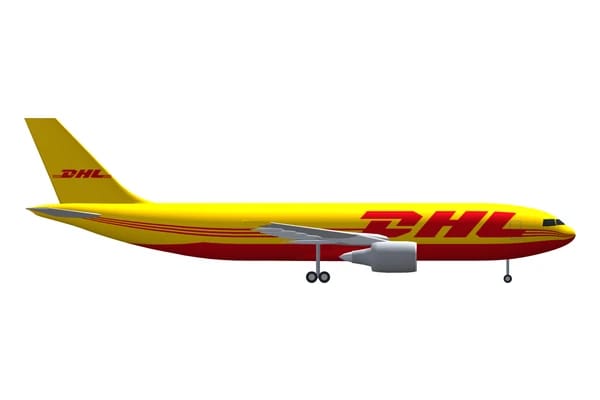
.jpg)
.jpg)

The manufacturer’s drawing gives the 737-800’s fin a sweep of 36 degrees. The real one has 40, and so does ours.