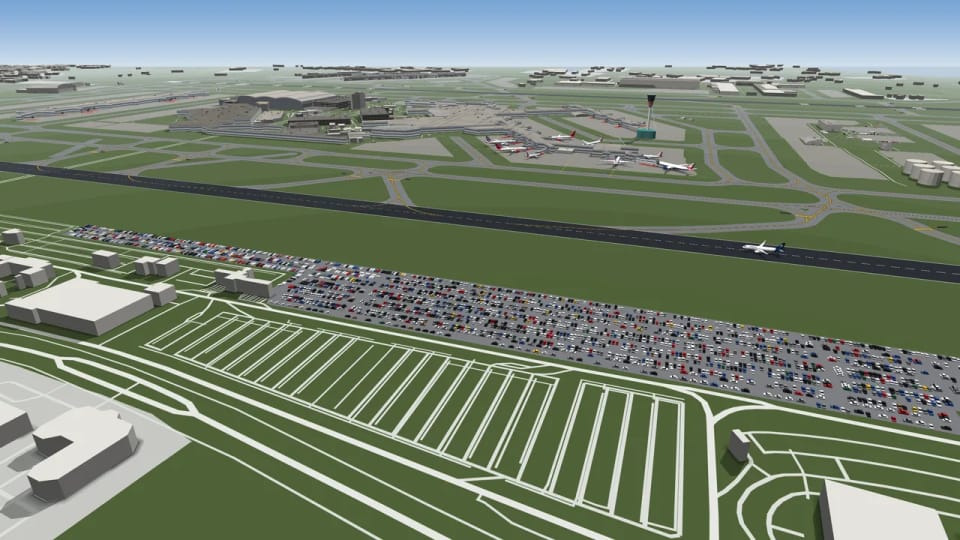
A forest behind the car park
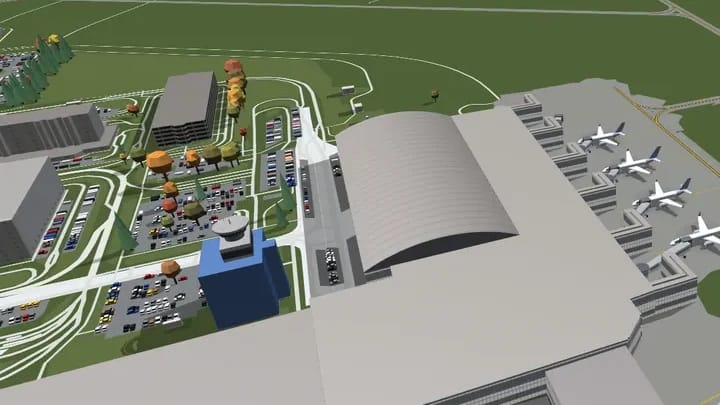
Frankfurt airport sits in a forest. The map knows it, but until 30 September not a single tree grew out of it in 3D, and the buildings and car parks stood on a bare green plain.
Now trees grow wherever the open map has greenery, at every 3D airport, and the ones nearest the camera cast shadows in the sun. A tree the map records individually stands exactly where it is. A forest is planted as an illustration: a given tree doesn’t stand where a real one does, but the forest is where the forest really is.
At a real airport nothing tall may grow near a runway, because the area around it has to stay clear of obstacles. So the forest stays away from runways, taxiways and the concrete where aircraft park, and it doesn’t grow on roads, on water or inside buildings either. The species follow the latitude: palms and broadleaf evergreens in the tropics, palms and pines in the subtropics, mixed woods in the temperate belt, taiga in the far north.
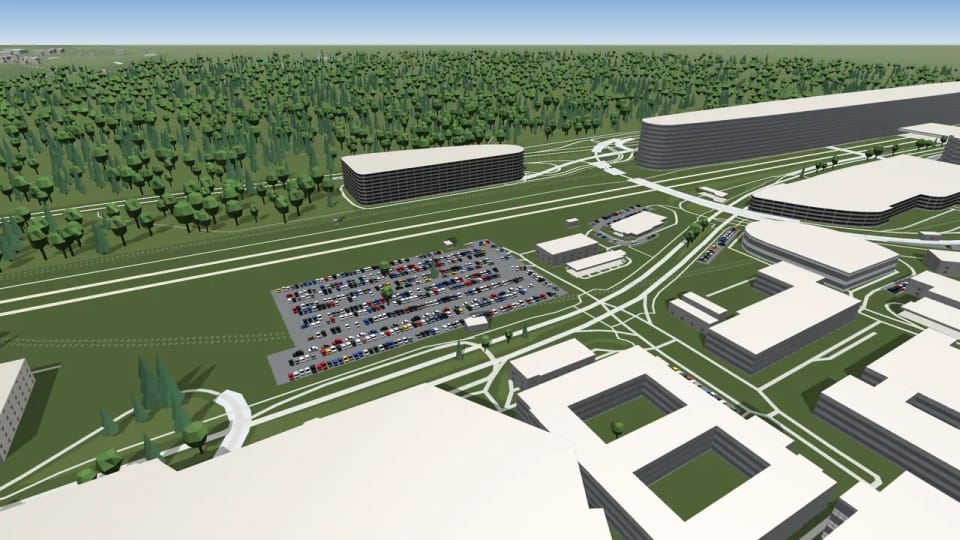
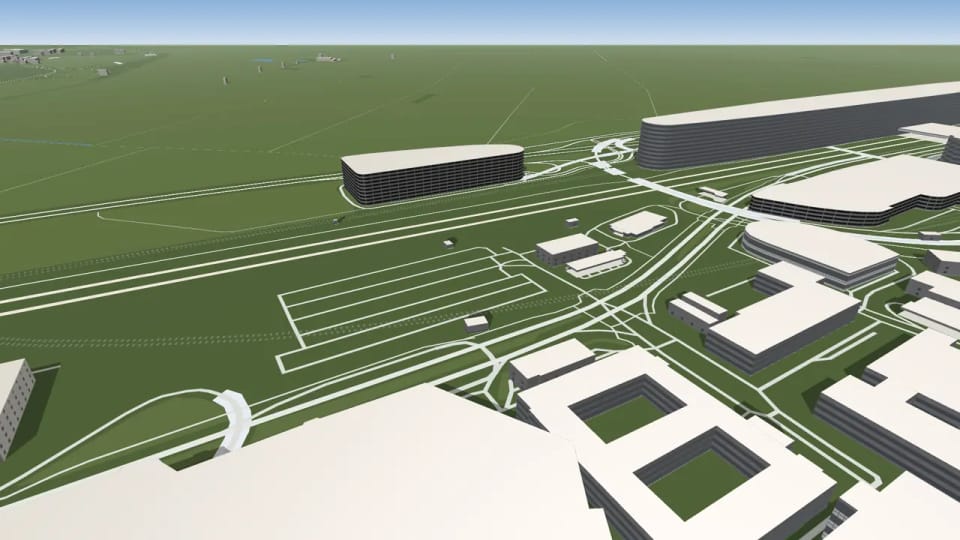
Autumn in Prague, spring in Sydney
Trees know the date. Outside the tropics, broadleaf trees take on autumn colours for about a month, then shed their leaves, stand bare through the winter and come into leaf again in spring. The further from the equator, the longer the bare winter. Conifers and palms stay green all year.
The season follows the date of the scene, not the date on your computer: replay an evening from last week and the trees are as they were that evening. And it follows the hemisphere. While the leaves turn in Prague, spring is coming to Sydney, half a year apart, just like the real seasons. At night the crowns turn blue-grey like the grass around them.
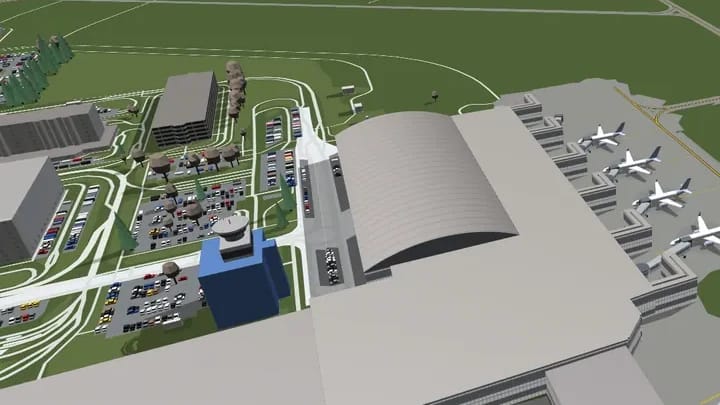
Car parks that keep time
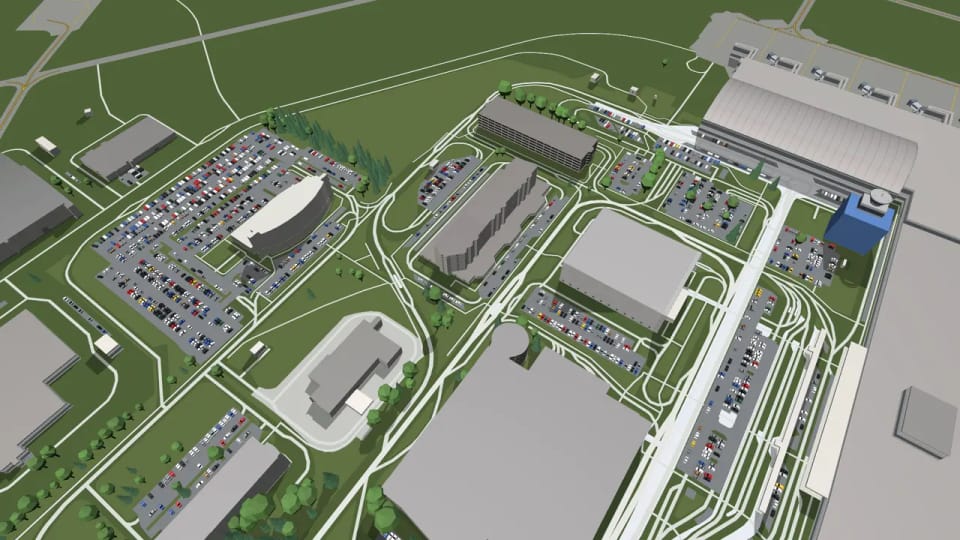
The cars follow the local clock and the day of the week. At night roughly half as many stand by the terminal in Prague as at noon, and a Sunday looks different from a Tuesday. The same scene always has the same cars: as the hour moves on they arrive and leave one at a time, and nothing reshuffles. Most are white, then black, grey and silver, with a few blue and red ones, as in a real car park.
The cars stand in rows along the aisles, the way people park, and the aisles stay free. No car ever stands on a road, on a tree trunk, inside a building or across the edge of the car park, though one may park under a bridge, as people do. Over Atlanta there are more than 20,000 bays within reach of the camera. The cars are an illustration and don’t count as vehicles at the airport. Ground vehicles that broadcast their own position, such as fire engines or follow-me cars, drive in 3D where they really are.
Trees and cars appear once you zoom in on the airport, up to 1.6 kilometres from the camera, a little closer on a weaker device, so a phone doesn’t run out of breath.
A whole economy of carts
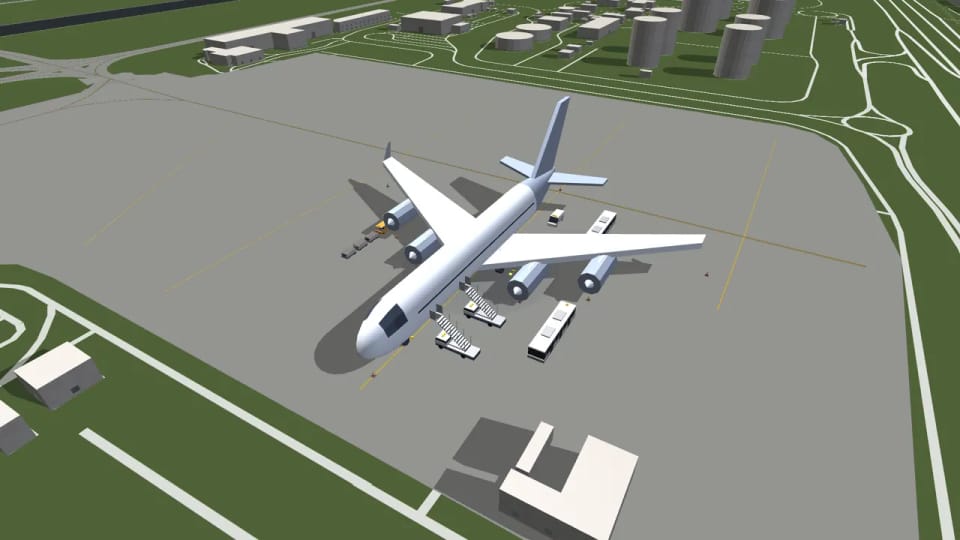
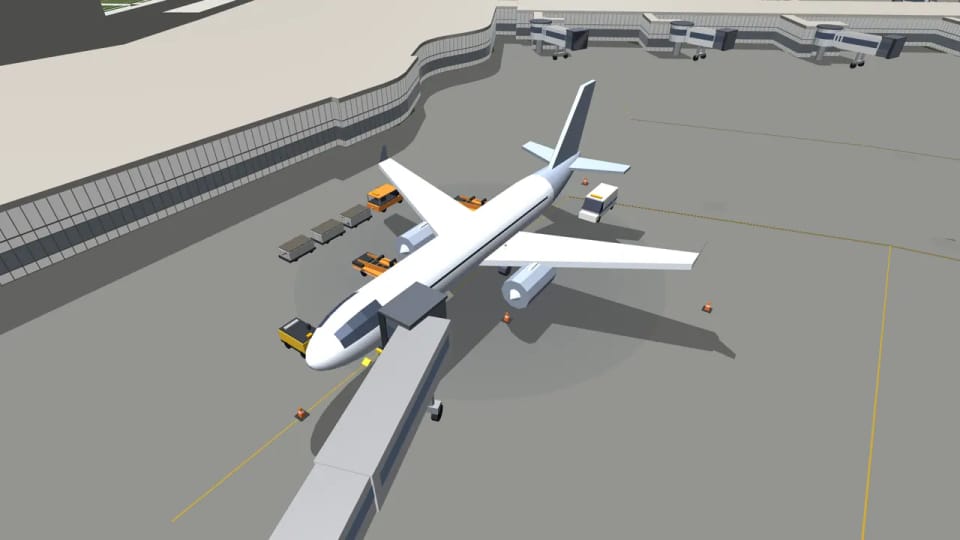
Since 1 October the 3D airports also have what makes a stand look like a stand. As soon as an aircraft stops, illustrative ground equipment drives up: a tug, steps, a fuel truck, catering, baggage carts, a belt loader and the cleaners. A widebody gets two sets of steps. For about an hour it is busy around the aircraft, then everything drives off again.
At a remote stand two buses wait. Each fills for roughly a quarter of an hour, then leaves for the terminal. At night the vehicles show amber beacons, the tug included.
We draw aircraft on the ground larger than they are so you can see them from above. When the equipment wouldn’t fit beside one, the aircraft shrinks a little, but never below its real size. The vehicles stay on the concrete and never drive onto the grass, through a building or through a jet bridge, and the catering truck driving under a bridge stays visible all the way.
The trees know the date. While the leaves fall in Prague, spring comes to the trees around Sydney airport.