Hiss with voices in it
Plenty of people listen to the airband. A receiver on the roof, tuned to the tower of a nearby airport, often already streams to one of the listening sites. We don’t build these stations. Their owners add map.flights as one more output, the same way the ADS-B network grew.
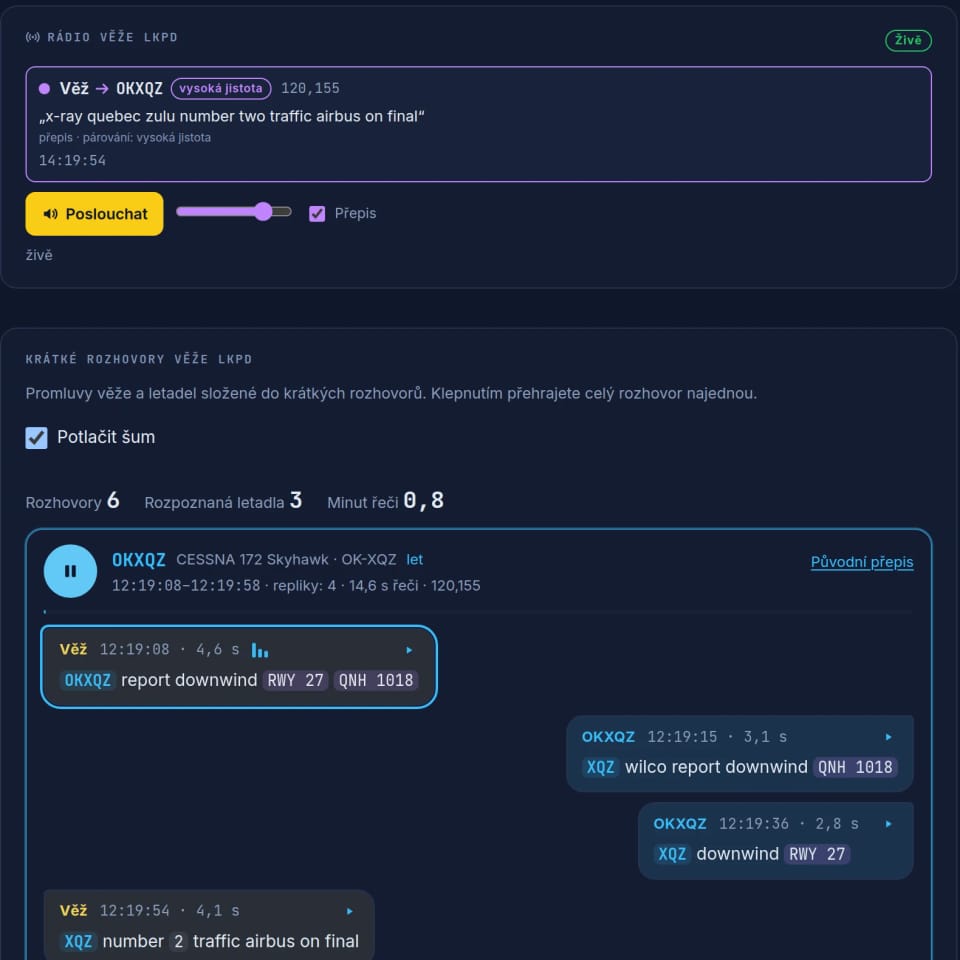
What arrives is a continuous stream, and most of it is nothing: hiss, or silence once the receiver’s squelch closes. Then someone presses the transmit button, a few seconds of speech follow, and the hiss is back. We listen to the stream as it comes in and cut it wherever a voice comes out of the noise and wherever it sinks back. A short click or a burst of interference is not speech and doesn’t count.
Every transmission becomes a piece of its own, with the time we received it. One station listening to the tower at Pardubice cut 214 of them in twenty-four hours.
Numbers you can read
Every transmission is turned into text. We do it on our own computers, and neither the sound nor the text goes to any outside service.
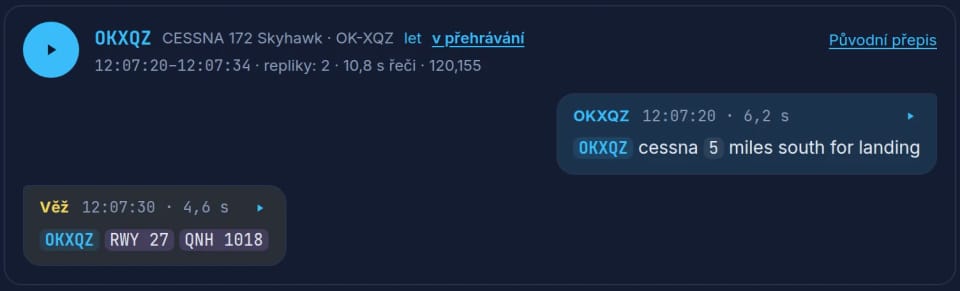
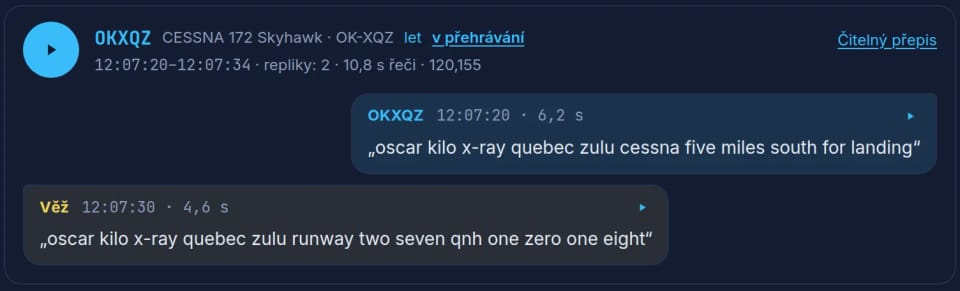
Radio English is a language of numbers and spelling. ‘QNH one zero one three’ becomes QNH 1013, ‘runway two seven’ becomes runway 27, ‘flight level seven zero’ becomes FL070 and a frequency read out digit by digit becomes 120.155. A registration spelled as ‘oscar kilo’ plus three more letters folds into one callsign, and ‘Speedbird’ followed by a number turns out to be British Airways, because we know the radio names of airlines.
A transcript can be wrong, so the readable version never replaces the original. The exact words, as they were heard, are one click away.
Which aircraft is speaking
A callsign in the text is only half the work. We compare it with the aircraft that were around that airport at that very moment on our map. A slightly garbled airline name or registration still gets recognised. Whether it was the tower or the pilot speaking, the order of the words gives away.
We highlight an aircraft only when we are sure and no other candidate comes close. Otherwise the transmission carries the word ‘estimate’, or nothing at all. And we never use the voice itself: we are not looking for the person at the microphone, only for the aircraft.
Transmissions of the tower and one aircraft that follow each other closely are put together into a short conversation, like messages on a phone, the tower on one side and the aircraft on the other. One tap plays the whole conversation, line by line. The airband hisses; ‘Reduce noise’ quietens it right in the browser, and the recording and the transcript stay untouched.
What your radio is doing
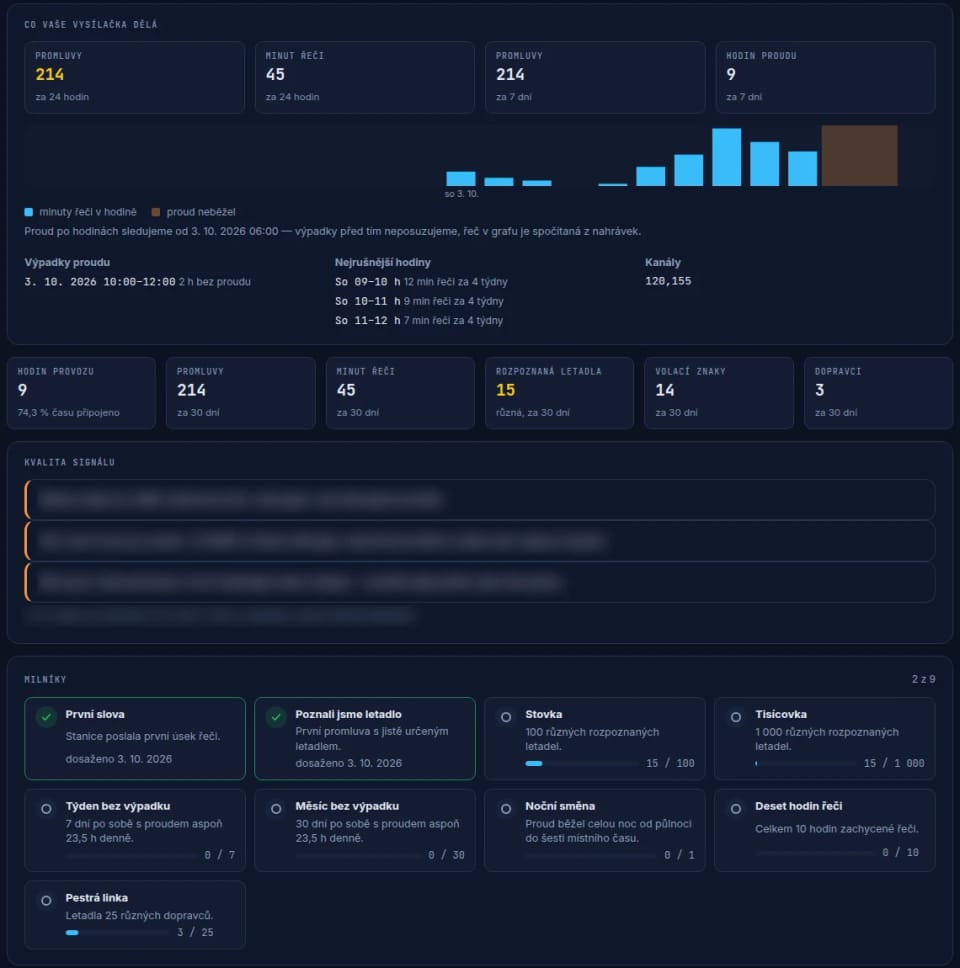
Whoever adds a station gets a page of their own. How many transmissions and minutes of speech it caught, the busiest hours on the frequency, when the stream dropped, how many different aircraft we recognised in its recordings. Advice comes from the levels we measure: when the peaks hit the ceiling or the hiss between calls is too loud, the page says what to try. Milestones too, from the first words and the first recognised aircraft to a week without a dropout or a night shift. And when the station goes quiet, we let its owner know.
Listening to the airband is an ordinary hobby in many countries; in others, publishing the recordings is against the law. So we decide on publishing country by country. The owner of a station can always hear their own recordings, because they are their data. Next to an airport’s profile the conversations play for everyone only where local rules allow it, so far from Czechia, and from some countries we publish nothing at all.
We never recognise anyone by their voice. Who is speaking comes from the words and from where the aircraft are.